Why Visual Performance Matters: Foundations for Occupational Therapy Practice — participation guide
3 contact hours · 0.3 AOTA CEUs · Module 1 — follow along, take notes, and complete the reflection prompts.
Module 1
Why Visual Performance Matters
Anchor concept
Vision is a performance system, not a single measurement. A passed acuity screening tells you the student can resolve a letter at distance — nothing about whether they can use vision to do the work of the day.
Follow along
What this module covers
- You are already treating vision
- Understand → assess → intervene
- Vision is the dominant channel for learning
- Why schools are required to respond
- Where OT sits relative to the eye care team
Key ideas
Capture these as you listen
- Visual performance is already on your caseload; the only question is whether it is named and measured.
- Understanding without assessment is a guess; assessment without intervention is abandonment.
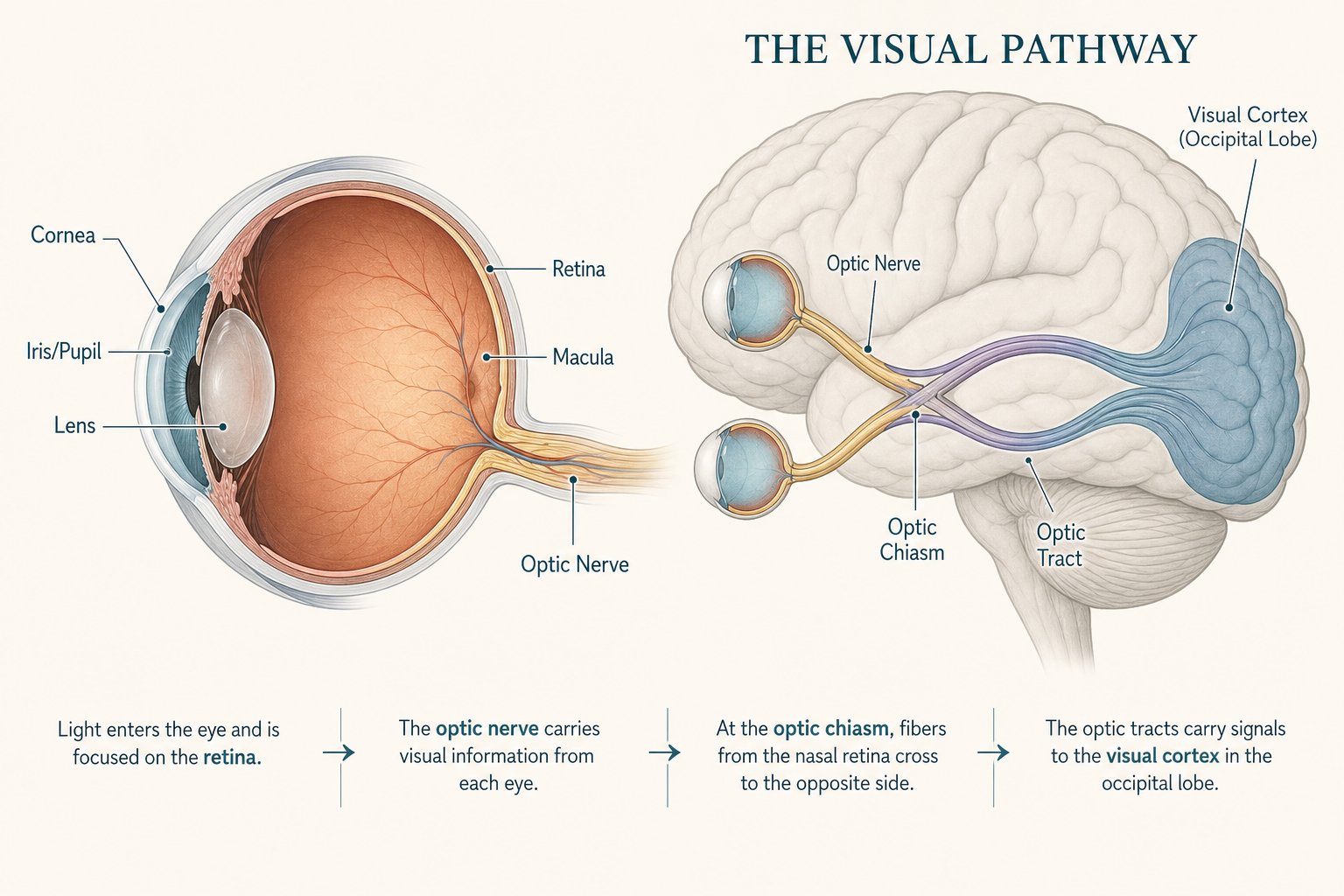
- Vision is a gateway system; visual deficits appear as reading, writing, mobility, and participation problems.
- Typical visual development follows a predictable timeline; persistent gaps past those windows warrant referral.
- OTs describe functional visual performance and occupational impact; eye care providers make the medical diagnosis.
- IDEA and Section 504 both welcome OTs' functional, performance-based evidence.
Notes
My notes for this module
Reference figures
Keep these for practice
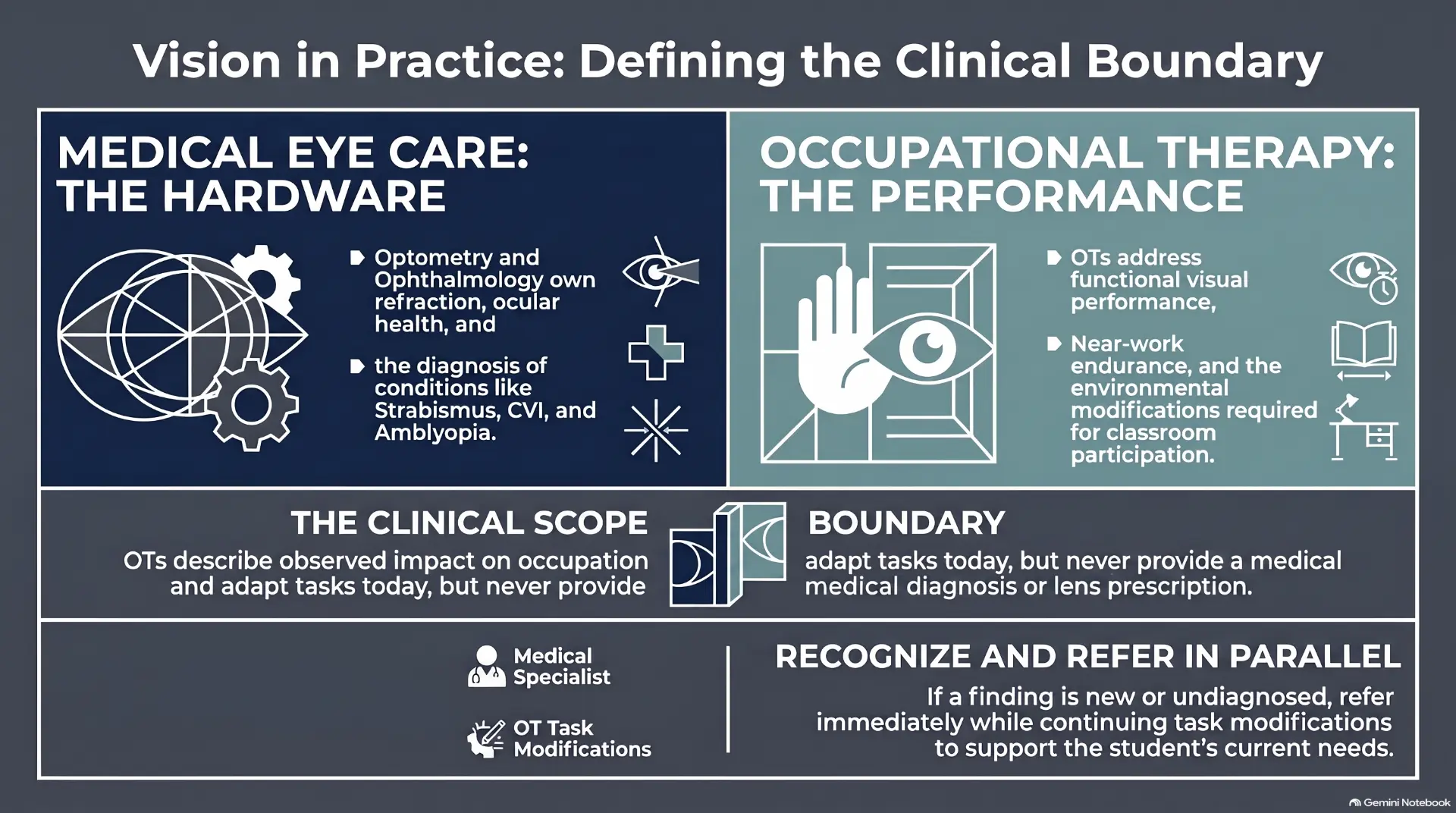
Where the referral sits in the student’s day
Apply it
Case prompt
A kindergarten teacher reports a student "just isn't paying attention" during calendar time and bumps into classmates during transitions. The school vision screen was passed six months ago. What visual-performance questions would you ask before assuming this is attention or behavior?
Practice
Mini exercise
In one sentence, describe the OT role in vision without using the words "diagnose," "therapy," or "eye doctor."
Take it to work
Action step this week
This week, write one observation of a student using only the language of functional visual performance and occupational impact. Avoid any diagnostic or medical terminology.